
betfair apuestas con pronósticos para 2026
betfair apuestas atrae cada vez a más personas gracias a la emoción que genera el seguimiento de los eventos deportivos en vivo. La interactividad y las opciones de apuesta durante el transcurso del juego añaden una capa extra de interés. betfair apuestas ruleta proporciona un marco de referencia útil para evaluar las probabilidades y tomar decisiones acertadas en momentos de alta incertidumbre.
Ver también:
- betfair casino de un vistazo
- Bonos y condiciones de apuestas destacados en betfair casino
- Análisis de cuotas con betfair apuestas ruleta
- Mejora tu experiencia móvil con betfair apuestas ruleta
- Galería visual de betfair casino
- Preguntas frecuentes sobre betfair apuestas slots
- Herramientas de Autoexclusión en betfair casino
betfair casino de un vistazo
| Feature | Details |
|---|---|
| Monedas cripto | Bitcoin, Ethereum y USDT |
| Retiro rápido | En 24 horas |
| Bonus | Welcome 50 up to €1000 |
| VIP program | Exclusivo para jugadores fieles |
| Jugadores por mes | +150 activos |
Bonos y condiciones de apuestas destacados en betfair casino
- bono del 200% hasta €1500
- 300 giros gratis multiplicadores
- 45x liberación en 30 días
- 45x rollover en 30 días
Análisis de cuotas con betfair apuestas ruleta
Mercados de apuestas en betfair casino
betfair casino ofrece una de las ofertas de mercados más amplias del panorama español, cubriendo más de treinta deportes y competiciones de todo el mundo. En el fútbol, el rey indiscutible, encontrarás desde las ligas principales como LaLiga, Premier League, Champions League o Bundesliga hasta torneos de categorías inferiores y ligas regionales de países como Argentina, Brasil, Japón o Australia. Pero la versatilidad no se limita al deporte rey: el tenis, el baloncesto (incluida la NBA y la Euroliga), el balonmano, el ciclismo, el golf, la fórmula 1 y la MotoGP tienen una presencia destacada. Además, betfair casino apuesta por mercados nicho como los deportes electrónicos, el fútbol australiano, la liga de cricket de la India, el snooker y los dardos. Para cada evento, el usuario puede elegir entre una amplia gama de mercados: resultado final, doble oportunidad, hándicaps asiáticos y europeos, más/menos goles, y una extensa variedad de mercados de jugador, como goleador, tarjetas, córners, faltas o incluso estadísticas de pases.
Cuotas competitivas y formato de presentación
Las cuotas en betfair casino se caracterizan por un margen reducido, lo que se traduce en valores constantemente competitivos en comparación con la media del mercado español. En los eventos más populares, el margen suele situarse entre el 4% y el 5%, y en los mercados principales del fútbol, incluso puede bajar del 4%. La plataforma presenta las cuotas en formato decimal, el estándar en España, y permite alternar fácilmente a otros formatos (fraccionario o americano) desde los ajustes. La actualización de las cuotas es prácticamente en tiempo real, lo que permite reaccionar con rapidez a los cambios de última hora: lesiones, alineaciones, condiciones meteorológicas o movimientos de dinero. Además, betfair casino ofrece cuotas aumentadas o ‘boosts’ diarios en una selección de eventos y mercados, que se muestran claramente en la página principal y en las secciones de deportes. La presentación es limpia y funcional, con un buscador que permite encontrar rápidamente cualquier competición o mercado, y una vista de favoritos para guardar los deportes y ligas más habituales.
como jugar tragamonedas 2026 — como se juega tragamonedas
casino legal españa 2026 — cumplimiento normativo
Apuestas en directo y especiales
La sección de apuestas en directo de betfair casino es uno de sus puntos fuertes, con más de 10.000 eventos al mes para seguir en vivo. La cobertura incluye fútbol, tenis, baloncesto, voleibol, hockey sobre hielo y muchos otros deportes, con mercados que se actualizan de forma dinámica según transcurre el partido: resultado, próximo punto, próximo gol, hándicap en vivo, y una gran cantidad de mercados basados en estadísticas en tiempo real. El sistema de streaming integrado permite ver muchos eventos directamente en la web o la app, siempre que se tenga saldo en la cuenta o se haya realizado una apuesta en el evento. Las apuestas especiales completan la oferta: política, premios de cine como los Oscar, reality shows o eventos de entretenimiento. Para los usuarios más experimentados, betfair casino incluye la opción de apuestas combinadas con un potente constructor de apuestas que muestra las cuotas acumuladas al instante, así como la posibilidad de vender o cobrar una apuesta antes de que finalice el evento con la función de ‘Cash Out’, tanto total como parcial.
Mejora tu experiencia móvil con betfair apuestas ruleta
dual rendering refers to the process of generating two distinct visual outputs from a single underlying data set or scene graph, typically to serve different display targets or user contexts. In practice, this often means producing one high-fidelity, photorealistic image for a primary viewer—such as a desktop monitor or a VR headset—while simultaneously generating a lighter, optimized version for secondary displays like a mobile companion app, an in-game minimap, or a low-latency preview window. The two renderings may share geometry, textures, and animation states, but they diverge in resolution, shading complexity, lighting models, and post-processing effects. For instance, a game engine might render the main camera at 4K with ray-traced shadows and ambient occlusion, while the secondary output is downsampled to 720p with baked lighting and simplified materials to maintain a consistent 60 frames per second on less powerful hardware. Beyond mere resolution scaling, dual rendering can involve entirely different rendering pipelines: one path might use forward rendering for precise transparency and multi-sample anti-aliasing, while the other uses deferred shading to handle dozens of dynamic lights without stalling. The technique is also critical in mixed-reality applications, where the real-world passthrough and the virtual overlay must be composited with minimal latency, so the system renders the virtual content twice—once for the user’s dominant eye and once for the other, with slight perspective shifts to create stereoscopic depth. In architectural visualization, dual rendering allows a client to walk through a fully lit, textured model on a high-end workstation while a real estate agent simultaneously views a simplified, wireframe-like version on a tablet to adjust camera angles or measure distances without slowing down the main view. The implementation often leverages render-to-texture buffers, where the primary scene is rendered to a high-resolution target, and then a second pass extracts depth, normals, or color information to generate a stylized or compressed version. This can be done efficiently using compute shaders to downsample and re-project pixels, avoiding the need to re-run the entire vertex and fragment pipeline. However, dual rendering introduces synchronization challenges: if the two outputs are not perfectly aligned in time, users may perceive judder or ghosting, especially when the secondary display is used for interaction. To mitigate this, engines often use a shared command buffer that records draw calls once and then replays them with different viewport transforms and shader permutations. Another common approach is to use a single GPU pass that renders to multiple render targets (MRT), where each target stores a different layer of information—one for color, one for normal vectors, one for material IDs—and then a compositing shader generates the two final images from that data. This reduces the overhead of duplicated geometry processing and allows the CPU to issue fewer draw calls. In virtual reality, dual rendering is not just a convenience but a necessity, as each eye requires a separate image with a slightly different camera offset to match human binocular vision. Here, the two images are typically rendered at the same resolution and quality to avoid discomfort, but they may use foveated rendering, where the peripheral areas are rendered at lower resolution to reduce GPU load. This is a form of dual rendering with asymmetric quality. In web development, dual rendering can mean server-side rendering (SSR) for fast initial page load and search engine optimization, paired with client-side rendering (CSR) for interactive updates after hydration. The server produces a static HTML snapshot, while the client takes over with a JavaScript framework that re-renders the DOM for dynamic content. This dual approach ensures that users see content immediately, even on slow connections, while still enjoying the interactivity of a single-page application. Similarly, in data visualization, dual rendering might produce a detailed, interactive chart for analysts and a simplified, static summary image for inclusion in reports or emails. The two outputs are generated from the same dataset but use different chart types, color palettes, and annotation levels. For example, a line chart might show every data point with tooltips and zoom controls, while the secondary rendering is a bar chart with aggregated monthly totals and no interactivity. The challenge is to keep the two representations semantically consistent so that users do not get confused when switching between them. In the context of game development, dual rendering is also used for split-screen multiplayer, where each player gets their own viewport into the same world. Here, the two renderings are not just different resolutions but may have different field-of-view angles, camera positions, and even different levels of detail to optimize performance. The engine must manage two separate camera matrices and culling sets, which can double the CPU cost of visibility determination. To mitigate this, some engines use a technique called ‘cascade rendering’, where the scene is first rendered from a top-down perspective to generate a visibility buffer, and then each player’s view is rendered using that buffer to avoid redundant occlusion queries. Another emerging use is in digital twins, where a physical asset and its digital counterpart are rendered simultaneously: the physical view from a live camera feed is overlaid with the digital model’s predictions, requiring the digital model to be rendered twice—once aligned with the camera feed and once for a separate 3D inspection view. This dual rendering must handle different coordinate systems, scales, and lighting conditions, often using fiducial markers to align the virtual and real worlds. The performance implications are significant: dual rendering can double the GPU workload if not carefully optimized, so techniques like instancing, LOD selection, and temporal reuse are commonly employed. For instance, if the two views share a large portion of the scene, the engine can render the shared geometry once to a large texture and then sample from it for both outputs, only re-rendering the unique portions. This is similar to how a game might render a reflection using the same scene data but with a mirrored camera. In practice, dual rendering demands a robust architecture that separates the scene representation from the view-dependent processing, allowing multiple views to be generated from the same source of truth without duplicating memory or CPU work. It also requires careful management of GPU resources, such as render passes, framebuffers, and synchronization primitives, to avoid stalls and ensure that both outputs are ready within the frame budget.
betfair apuestas garantiza la protección de datos personales mediante cifrado avanzado.
bonos de bienvenida casas de apuestas 2026 — promos actualizadas
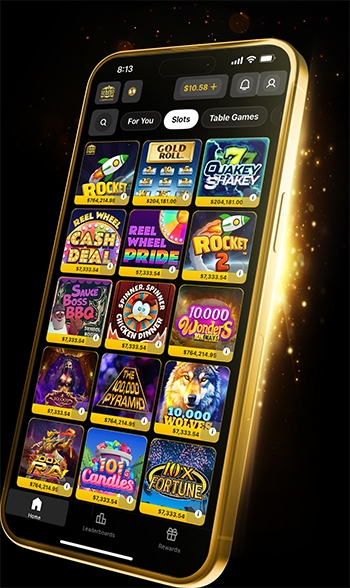
Galería visual de betfair casino
Preguntas frecuentes sobre betfair apuestas slots
¿Qué es betfair casino?
betfair casino es una casa de apuestas en línea que ofrece una amplia variedad de mercados deportivos, cuotas competitivas y una plataforma fácil de usar para apostar en eventos deportivos.
¿Es seguro usar betfair casino?
Sí, betfair casino opera bajo una licencia de DGOJ — Dirección General de Ordenación del Juego, lo que garantiza un entorno seguro y regulado para los usuarios.
¿Cómo puedo hacer un depósito en betfair casino?
Para comenzar, solo necesitas un depósito mínimo de €20. Puedes usar métodos de pago como tarjetas de crédito, monederos electrónicos y transferencias bancarias.
¿Qué tipos de apuestas puedo realizar?
Ofrecemos apuestas simples, combinadas, en vivo y de sistema en una gran variedad de deportes, incluyendo fútbol, baloncesto, tenis y más.
¿Existe algún bono de bienvenida?
Sí, los nuevos usuarios pueden disfrutar de un bono de bienvenida de hasta 300 giros gratis sin requisito de depósito, con requisitos de apuesta de 35x juego en 21 días veces.
Herramientas de Autoexclusión en betfair casino
El juego es una actividad exclusiva para mayores de 18 años y debe disfrutarse de forma responsable. betfair casino promueve un entorno de juego seguro y legal, regulado por la Dirección General de Ordenación del Juego (DGOJ) en España. Si sientes que pierdes el control, puedes inscribirte en el Registro General de Interdicciones de Acceso al Juego (RGIAJ) para autoexcluirte de todas las plataformas. Para apoyo y orientación, contacta con FEJAR en el 900 200 225 o visita jugarBIEN.es. Establece siempre límites de depósito y tiempo, y recuerda que el juego debe ser una forma de entretenimiento, nunca una vía para recuperar pérdidas.